By Lily Rutherford
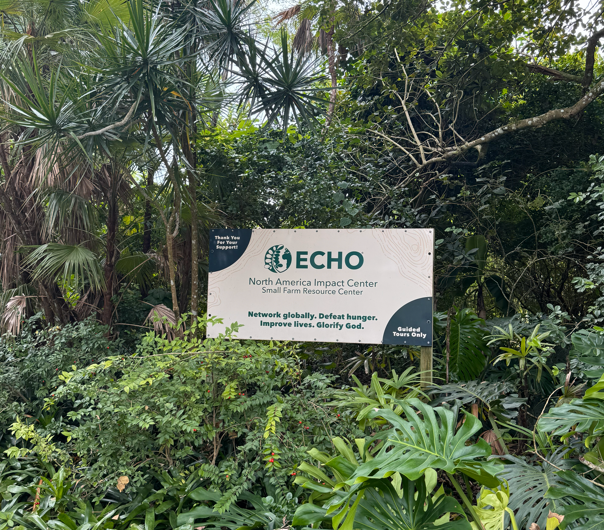
The Smith Center values supporting organizations with similar goals to our own, seeking to uplift missions tied to international sustainable agriculture. One organization that reinforces this value is ECHO (Educational Concerns for Hunger Organization).
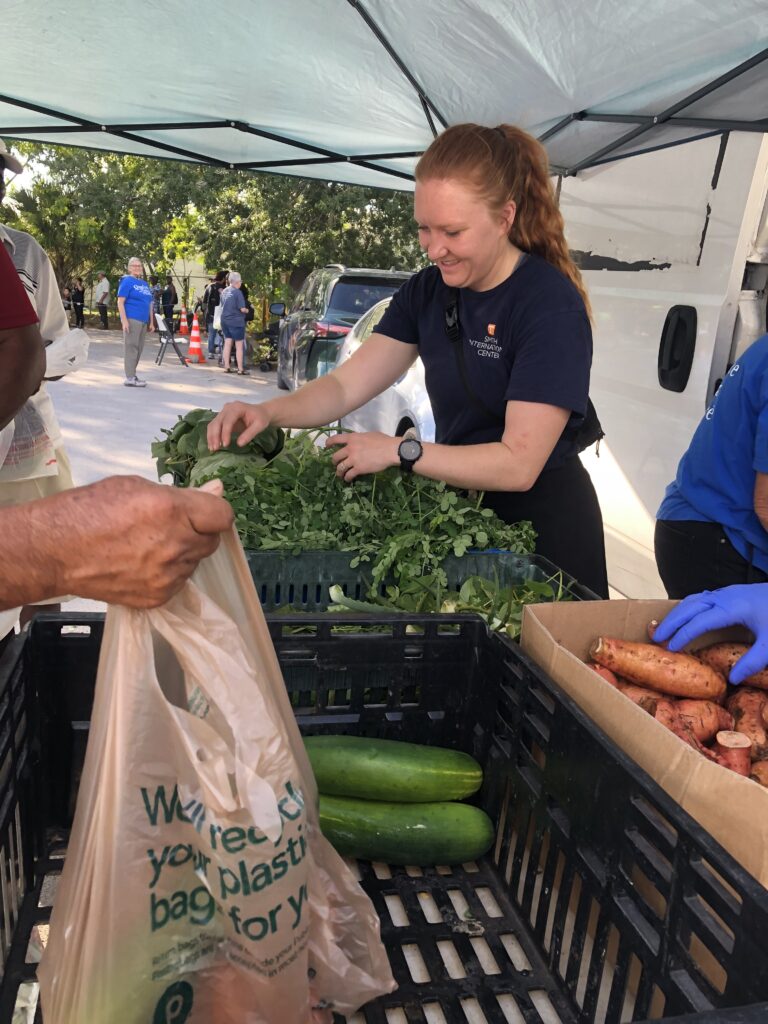
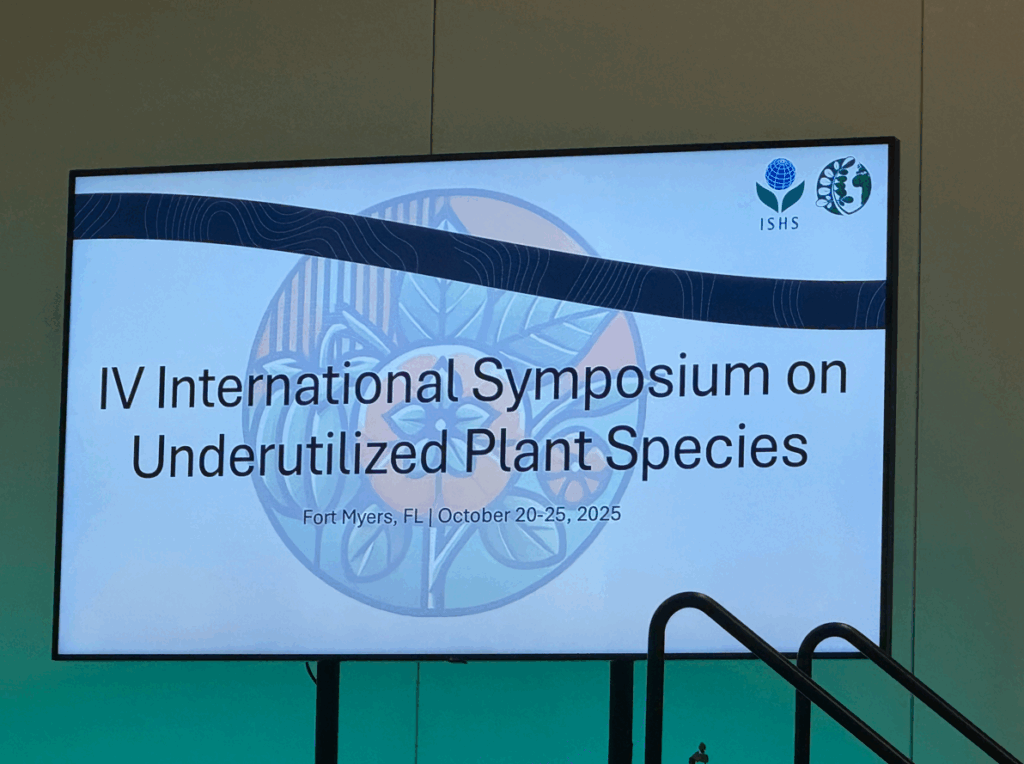
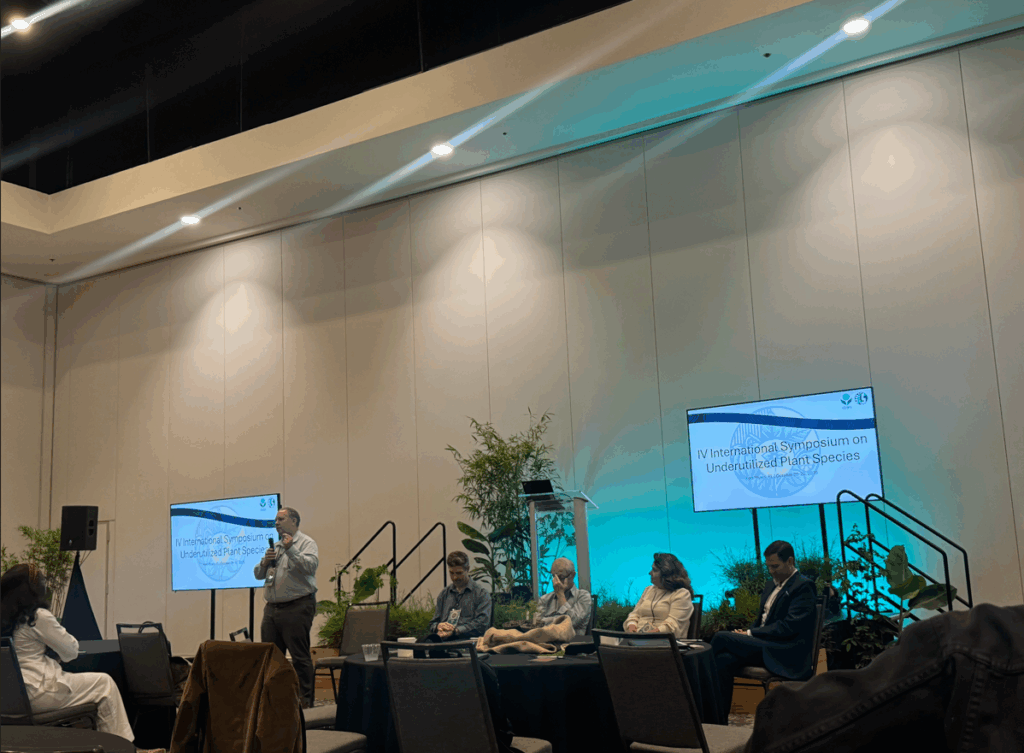
In October 2025, ECHO’s North American Impact Center hosted the International Society for Horticulture Science (ISHS) IV International Symposium on Underutilized Plant Species in Fort Myers, Florida. The Smith Center had two team members in attendance – Gracie Carter and Brian Flanagan.
Carter is a graduate research assistant for the Smith Center pursuing her PhD in plant, soil, and environmental sciences. Her participation in ECHO is only one contribution to her commitment to advancing the global engagement of UTIA. With her extensive international experience spanning across Southeast Asia, Central America and the Caribbean, South America, Europe, and East Africa, this opportunity was an excellent way for her to use her global perspective within current agricultural events in the U.S.
Carter’s presentation was titled “Review and classification of high potential neglected and underutilized species (NUS) of Cambodia and Thailand” and Flanagan’s was titled “Cultivating food security: Distributing neglected and underutilized species through a community-supported approach.”
On a large scale, ECHO is a nonprofit organization that assists small-scale farmers, missionaries, and development workers with solutions to combat hunger and poverty on a global scale. Its regional Impact Centers span across the world, including North America, Asia, East Africa, West Africa, and Central America. Through these centers, ECHO provides resources, training, and access to seed varieties to different communities.
Not only did this symposium serve as an opportunity to connect with other stakeholders involved in sustainable agriculture, but it also acted as a hands-on way to gauge how the field is developing.
The symposium’s underlying themes related to equipping small-scale farmers to use sustainable agriculture solutions by adopting and using neglected and underutilized species (NUS). These species are wild or domesticated plants that are frequently found in traditional diets and farming environments but are rarely studied on a large scale.
Many of these species are extremely adaptable to challenging growing conditions and have high nutritional value, making them advantageous to address food insecurity. NUS are often overlooked by researchers and producers in favor of staple crops and monocultures, and therefore underutilized in the effort to meet global food needs. Despite this, these species are important parts of the international food supply chain.
The Smith Center’s own Gracie Carter shared what she gained from her experience while attending the IV International Symposium on Underutilized Plant Species.
“Attending the symposium definitely helped me cultivate relationships in my field. I’m currently pursuing my PhD in Plant Sciences and my research focuses on the adoption of neglected and underutilized species to build more sustainable and resilient food systems in Northern Thailand.”
Carter elaborated on how the connections she made were impactful.
“This can be a niche topic, particularly among land-grant institutions in the U.S., so the knowledge I was able to glean from other participants regarding target species and research methods was very valuable.”
Events like this one allow field specialists to meet in person and see how their work could have an even greater impact. IV International Symposium on Underutilized Plant Species created the opportunity for the Smith Center to cultivate its connections within the sustainable agriculture space and engage with various global perspectives. It also provided the chance to help underutilized plant species gain more widespread exposure that can hopefully lead to an increase in attention and importance put on them in the future.
Finally, Carter explained what attending the IV International Symposium on Underutilized Plant Species meant to her.
“My favorite part of IV International Symposium on Underutilized Plant Science was connecting with other scientists, educators, and producers all working toward the shared goal of leveraging underutilized species to strengthen global food security. It was particularly exciting to see some of the species I’ve been growing in the green house and on the ANR green roof here at UT be highlighted at the conference, such as chaya, moringa, and katuk.”
Events like the IV International Symposium on Underutilized Plant Species are great opportunities for faculty, staff, and students to strengthen partnerships, form new connections, and share their work on the global stage.